On this page
The end of the year is when most businesses plan for the next one: budgets, targets and, inevitably, the question of whether the team can handle what is coming. Too often, that question is answered with a spreadsheet that multiplies headcount by eight hours a day and assumes everyone is available all the time.
Real capacity is almost always lower. People take leave, attend meetings, help colleagues and handle admin. Planning with real time data instead of assumptions gives you a far more reliable picture. Here is how to do it for 2027.
What Is Capacity Planning?
Capacity planning is the process of comparing the work your team can realistically deliver with the work you expect to have. It sits between two other kinds of planning:
Headcount planning: how many people you need over the longer term
Scheduling: who works on what, this week and next
Capacity planning connects them. It tells you whether your current team can deliver next quarter's work, and if not, where the gaps are.
Step 1: Measure Real Capacity
Start with what actually happened this year, not what was supposed to happen. Look at tracked hours by person and team, and compare them with expected hours. You will usually find that available time for core work is noticeably lower than the theoretical 40 hours a week.
Then account for known reductions next year:
Public holidays and planned vacation
Regular internal work, such as meetings, training and admin
Management and mentoring time for team leads
Seasonal patterns, such as quieter summer months or a busy year-end
Step 2: Understand Where Time Goes
Break this year's hours down by project, client or type of work. This shows which kinds of work consume the most capacity and how long typical projects really take, which is essential for estimating next year's demand. Our guide on improving project time estimation goes deeper on this.
Step 3: Forecast Demand
Next, estimate the work you expect in 2027. Use your sales pipeline, renewals, planned internal projects and growth targets. Convert that work into hours using what you learned in step 2, rather than optimistic guesses.
Step 4: Compare and Find the Gaps
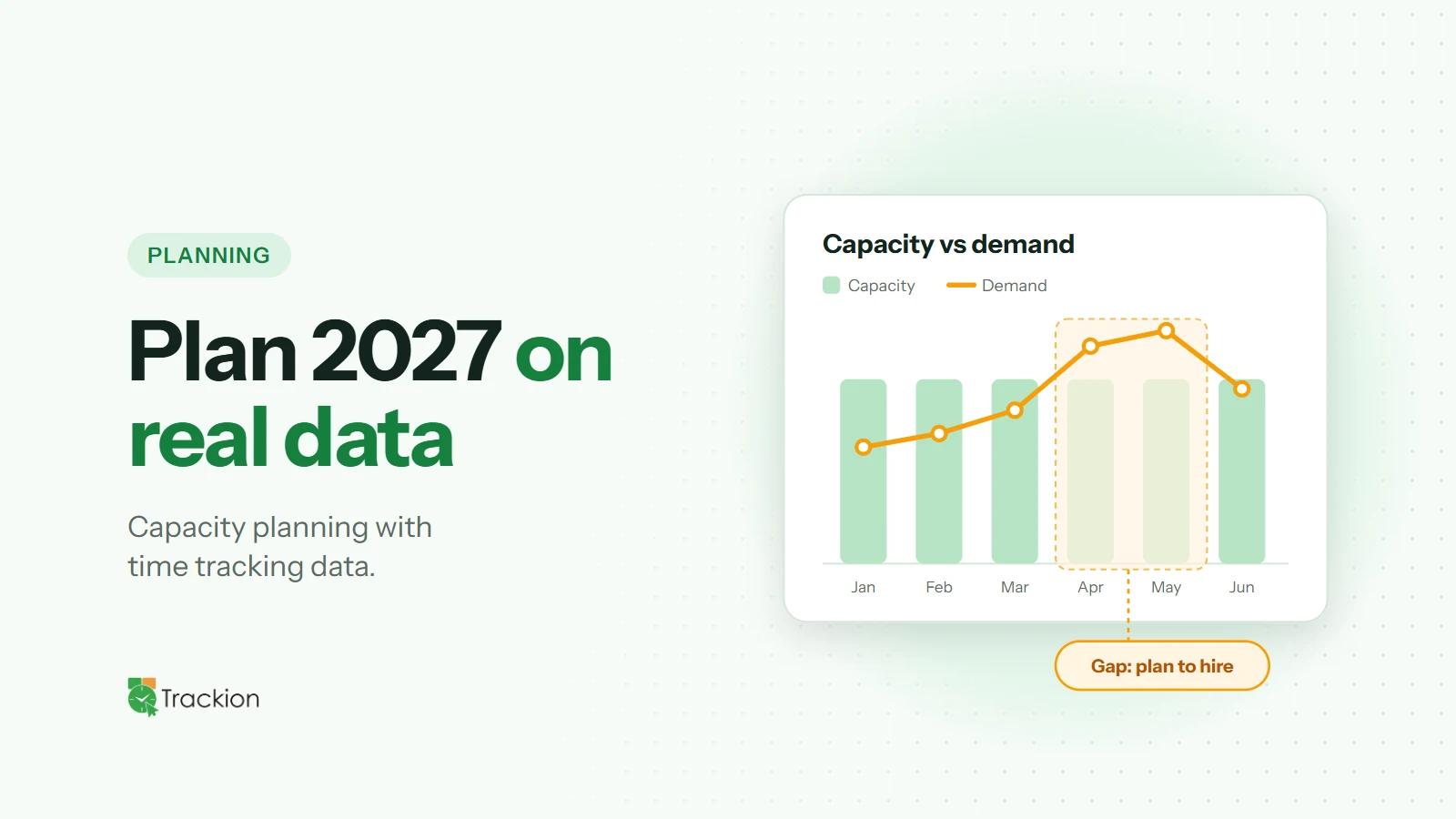
Put capacity and demand side by side, month by month and by role. Three situations usually appear:
Over capacity: demand exceeds what the team can deliver. Plan hiring, contractors or a change in scope.
Under capacity: the team has spare time. Plan sales activity, internal projects or training.
Skill gaps: total hours look fine, but the work needs skills only a few people have.
Step 5: Plan Headcount With Evidence
With real data, hiring decisions become much clearer. You can show exactly which roles are overloaded, from when, and by how much. It also helps you avoid hiring too early, when the real issue is uneven workload or time lost to low-value tasks.
Step 6: Review Every Quarter
A capacity plan is a living document. Compare forecasts with actual tracked hours every quarter and adjust. Watch for warning signs such as rising overtime, regular late-night work and growing idle time, which suggest the plan and reality are drifting apart.
How Trackion Supports Capacity Planning
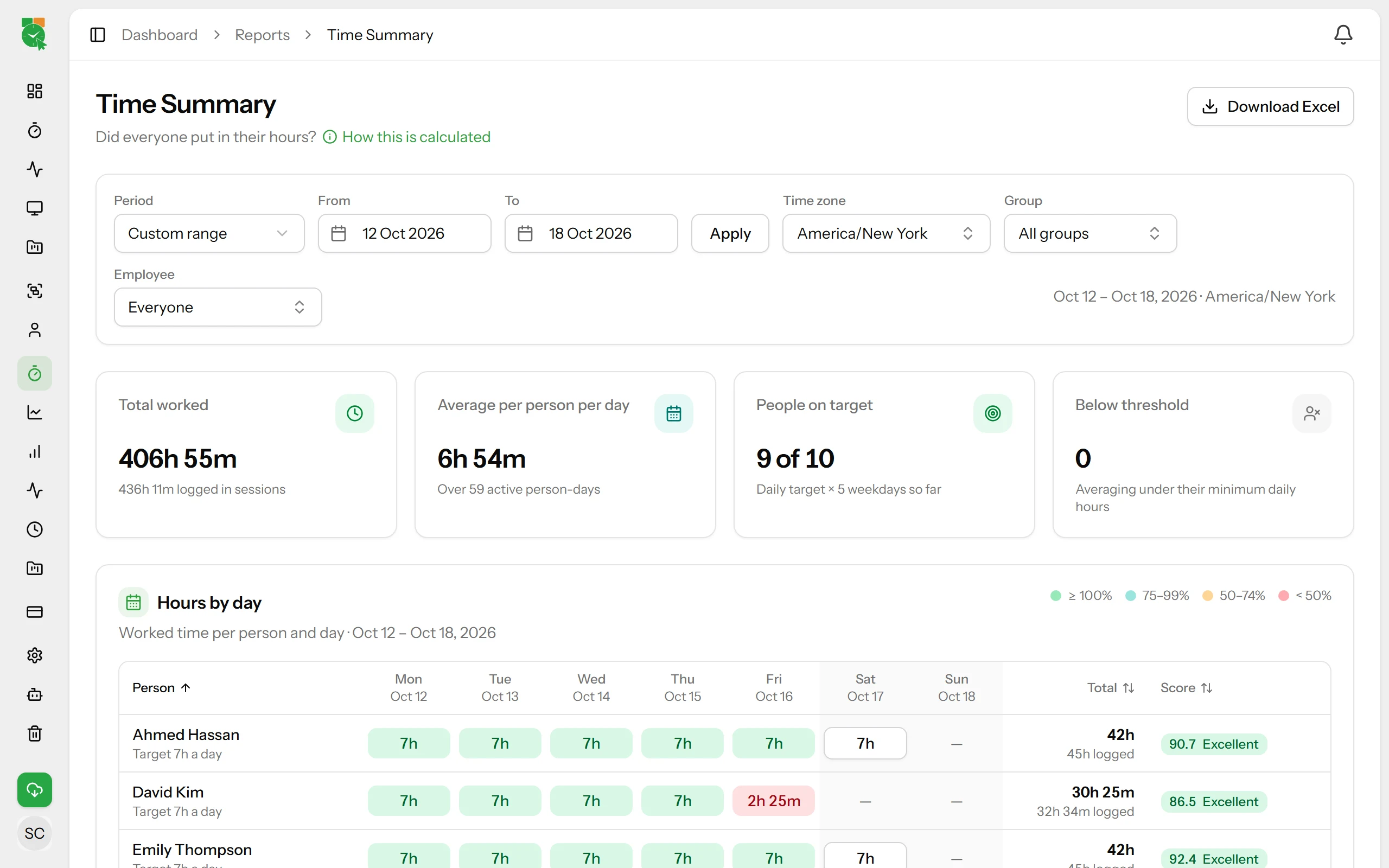
Trackion provides the real-world data capacity planning needs. Time Summary compares weekly hours with each person's daily target, Project Tracking shows how hours are spread across projects, and Work Pattern Analysis reveals when people work, including long days that point to overload.
Idle Time Deep Dive helps you see where time is being lost, and every report can be filtered by team or person and exported to Excel to feed your planning spreadsheet.
Final Thoughts
Good capacity planning replaces assumptions with evidence. Measure real capacity, understand where time goes, forecast demand honestly and review the plan regularly. Start with this year's time data, and you will go into 2027 with a plan your team can actually deliver.