On this page
If you run an agency, consultancy, IT services company or any team that sells its time, utilization rate is one of the most important numbers you can track. It shows how much of your team's available time goes into billable or core work, and it has a direct line to revenue, pricing and hiring decisions.
It is also easy to misuse. Push utilization too hard and you get burnout, rushed work and no time for improvement. Here is how to calculate it, what good looks like and how to improve it sustainably.
What Is Employee Utilization Rate?
Utilization rate is the percentage of a person's available working time spent on billable or productive core work. A designer who spends 30 of their 40 available hours on client projects has a utilization rate of 75%.
There are two common versions:
Billable utilization: only time that can be billed to clients counts
Overall (or resource) utilization: billable time plus internal project work counts
Billable utilization matters most for revenue. Overall utilization is useful for internal teams and for understanding total workload.
How to Calculate Utilization Rate
The formula is simple:
Utilization rate = (billable hours ÷ available hours) × 100
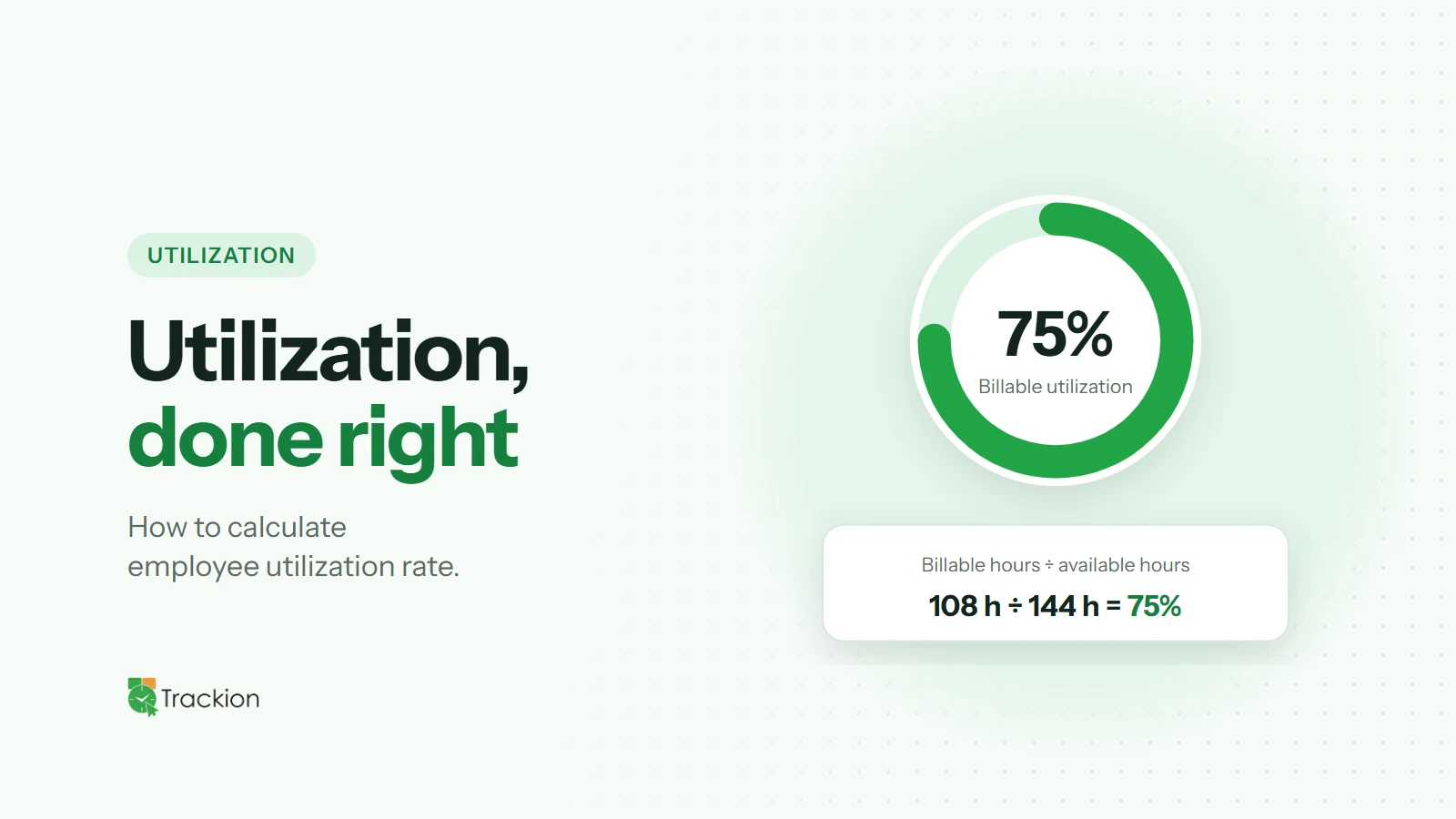
Available hours are the hours someone is expected to work in the period, minus holidays, vacation and other planned leave. For example, if a developer has 160 working hours in a month, takes 16 hours of leave and logs 108 billable hours:
Available hours: 160 − 16 = 144
Utilization: 108 ÷ 144 × 100 = 75%
Calculate it per person, per team and for the whole company. Each view answers a different question.
What Is a Good Utilization Rate?
There is no single right number. It depends on the role and the business model. Commonly cited targets for billable roles in professional services sit somewhere between about 70% and 85%, while roles with more internal responsibilities, such as team leads, will naturally be lower.
The more useful exercise is to set your own targets by role, based on your pricing and the amount of non-billable work each role genuinely needs to do, such as training, sales support and internal projects.
Why 100% Utilization Is a Warning Sign
It is tempting to aim as high as possible, but a team running at or near 100% has no slack. There is no time for learning, process improvement, helping colleagues or absorbing surprises. Quality slips, estimates get missed and people burn out.
Consistently very high utilization is often a sign you need to hire, raise prices or say no to some work. For more on spotting overload early, see our guide on building a high-performance remote team.
Why Low Utilization Happens
Low utilization is rarely about people slacking off. Common causes include:
Not enough sold work in the pipeline
Poor scheduling, with people waiting between projects
Too much internal admin, meetings or reporting
Unrecorded billable time, so the work happens but never gets counted
That last one is more common than most businesses realise, and it is the easiest to fix.
How to Improve Utilization Sustainably
Capture all the time. Automatic time tracking stops billable work from slipping through the cracks. Our comparison of automatic tracking and manual timesheets explains why.
Cut low-value internal work. Review recurring meetings and reports. If nobody would miss them, drop them.
Plan capacity ahead. Match upcoming work to available people before gaps appear.
Balance workloads. Move work from overloaded people to those with room.
Review monthly, not daily. Utilization fluctuates. Trends over several weeks are what matter.
How Trackion Helps You Measure Utilization
Trackion gives you the time data that utilization depends on. The desktop app for Windows and macOS records work sessions automatically, and employees choose the project they are working on. Set up each client or engagement as a project, and the Project Tracking report shows how hours split between client and internal work.
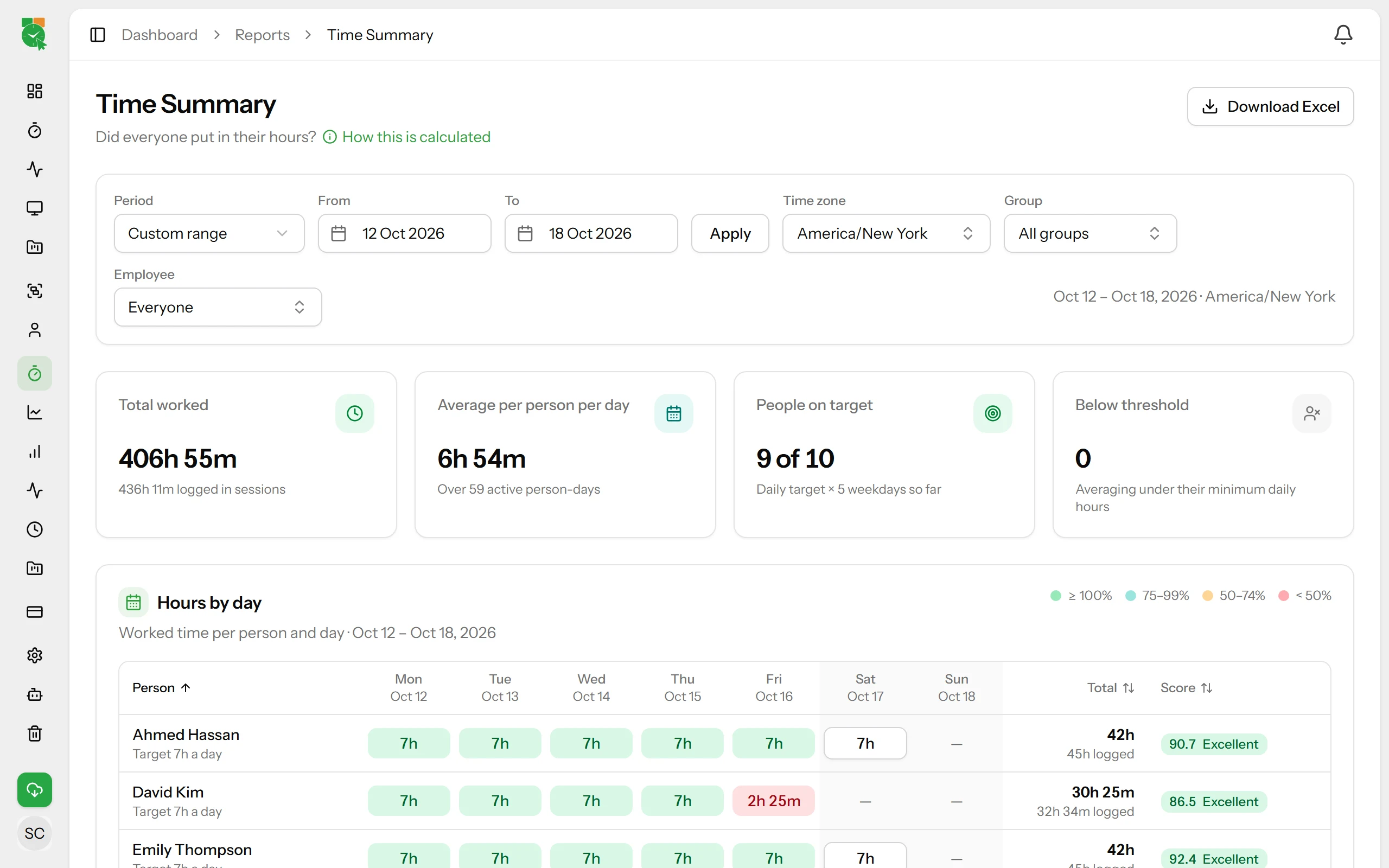
Time Summary compares each person's weekly hours with their daily target, and every report can be exported to Excel, so calculating utilization by person or team takes minutes.
Final Thoughts
Utilization rate is a powerful number when it is used to plan, not to pressure. Calculate it consistently, set realistic targets by role, watch for both very high and very low numbers, and make sure every billable hour is captured. Do that, and utilization becomes a guide to healthier, more profitable work.