On this page
Hiring across borders lets you build a stronger team, but it also means the working day rarely lines up. When one colleague is starting their morning, another is wrapping up for the night. Without the right habits, that gap leads to slow decisions, missed handovers and people working at unhealthy hours to stay in sync.
The good news is that distributed teams can be just as productive as co-located ones. Here is how to manage a remote team across time zones.
Map Everyone's Working Hours
Start with a shared, visible record of when each person works, including their time zone. It sounds basic, but it prevents a surprising number of problems, such as meetings booked in the middle of someone's night or urgent requests sent hours after a colleague has logged off.
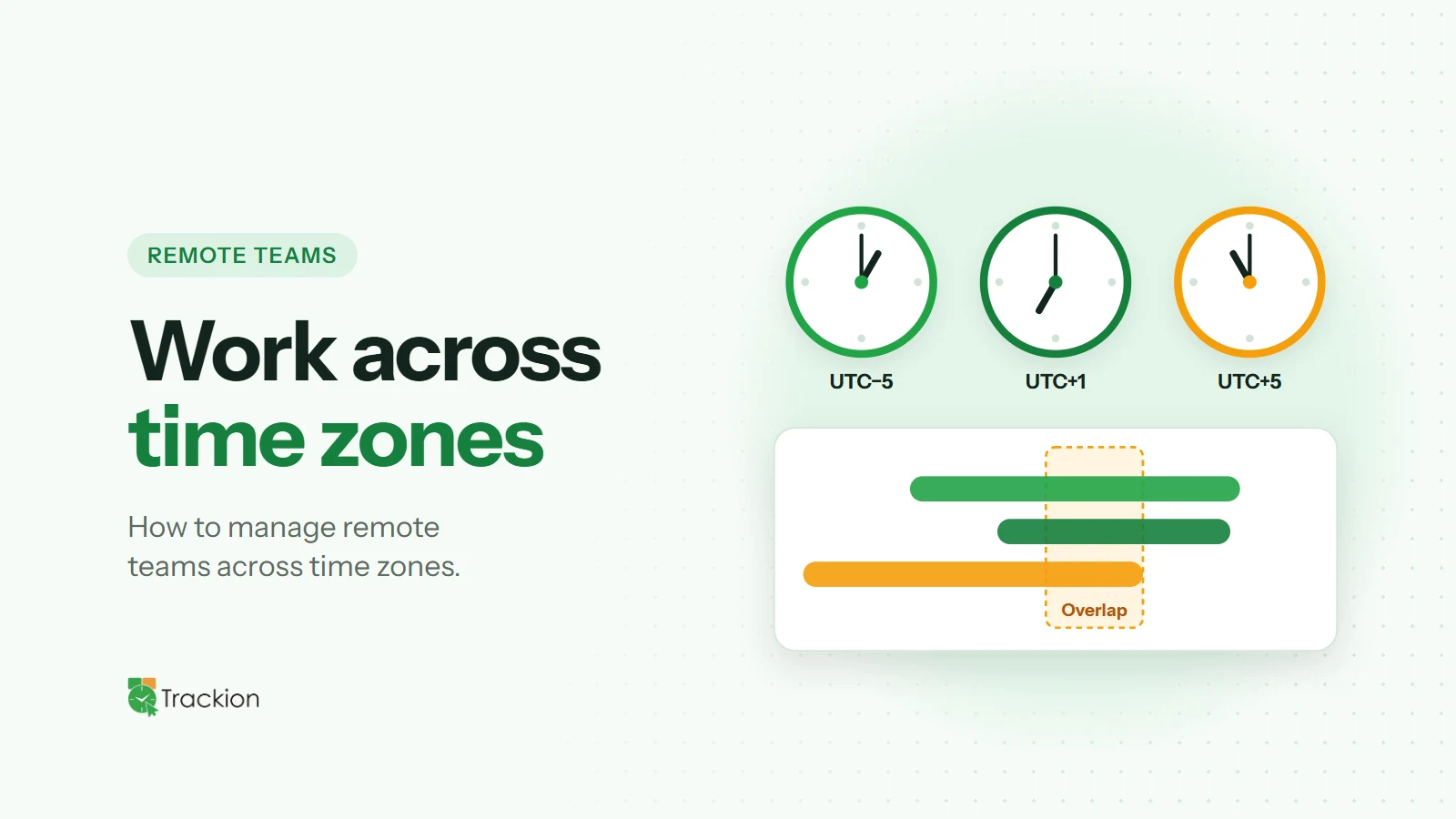
Protect a Small Overlap Window
Most teams benefit from a short block of time, even an hour or two, when everyone is available. Use it for the conversations that genuinely need to happen live: planning, unblocking and relationship building. Everything else can happen asynchronously.
Make Asynchronous Communication the Default
When people are not online at the same time, written communication becomes the backbone of the team. Encourage clear, complete messages that someone can act on without a follow-up question. Record short video walkthroughs for complex topics, and document decisions where everyone can find them.
A useful test: could a colleague in another time zone pick this up tomorrow morning and move forward without waiting for you?
Rotate Meeting Times Fairly
If some meetings must fall outside normal hours for part of the team, rotate the inconvenience. It should not always be the same people joining early in the morning or late at night. Fairness here has a big impact on morale.
Always Write the Time Zone
"Let's meet at 3" means different things in different places. Always include the time zone, or better, use calendar invites that convert times automatically. Small habits like this remove a lot of friction.
Set Clear Goals and Handovers
In a distributed team, visibility comes from clarity rather than presence. Give every piece of work a clear owner, a definition of done and a deadline. For work that passes between regions, agree on a simple handover format so the next person knows exactly where things stand.
Watch for Overwork
Time zone differences make it tempting to stay online "just in case". Over time, that leads to long days and burnout. Encourage people to keep to their working hours, and keep an eye on patterns such as regular late-night sessions. For more on this, see our article on work-life balance in remote work.
Get Visibility Without Constant Check-Ins
Managers of distributed teams often compensate for distance with frequent status requests, which interrupt focus and signal mistrust. A better approach is a shared source of truth for hours, projects and progress that everyone can see, so check-ins can focus on solving problems rather than reporting.
How Trackion Helps Distributed Teams
Trackion gives distributed teams a shared picture of work without constant check-ins. Live status shows who is working right now and on which project, with notifications when work sessions start and end. Work Pattern Analysis shows when each person works, which helps you spot overlap and late-night habits.
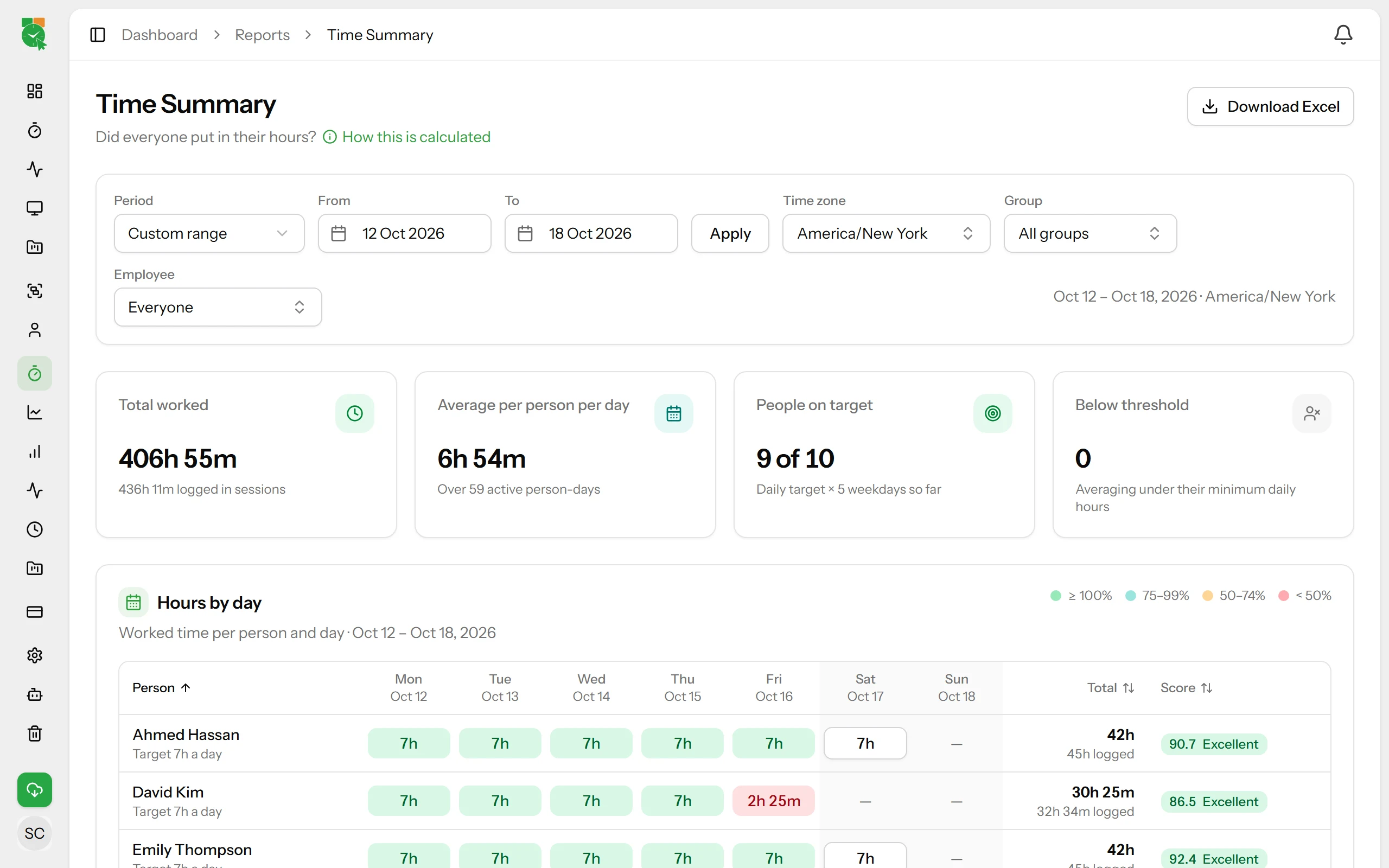
Time Summary compares weekly hours with each person's target, and Project Tracking shows how time is spread across projects, so managers can support their team wherever they are.
Final Thoughts
Managing a remote team across time zones is less about tools and more about habits: a protected overlap window, strong asynchronous communication, fair scheduling and clear ownership. Build those habits and distance stops being an obstacle and becomes an advantage, with work moving forward around the clock.